
Each time I walk past the door to the room my mother occupied, I feel the emotional weight of a sticker that reads: “Home is not home without Mom.” If you have ever lost someone close to you, you live with two realizations: that you will never see that person in physical form again, and that their memory will always occupy a space in your consciousness. It is as if they remain alive in your mind. Humanity has a long-standing need to feel the intangible, so we project the identities of the deceased onto “thought-objects.” This projection transfers emotional weight onto the object, serving as a token of their presence in our ongoing lives.
The scar of death is a profound statement often captured by art; thus, we find these “tokens” even in public spaces. In nearly every corner of the world, we commemorate the deceased through personalized forms: gravestones, monuments, planting trees, tattoos, or photographs. Public spaces showcase artworks and memorial structures that prove a society includes not only those who walk the earth’s surface but also those buried beneath its soil. To illuminate the catastrophe of death, the living decorate a “broken space” with mental and emotional art.
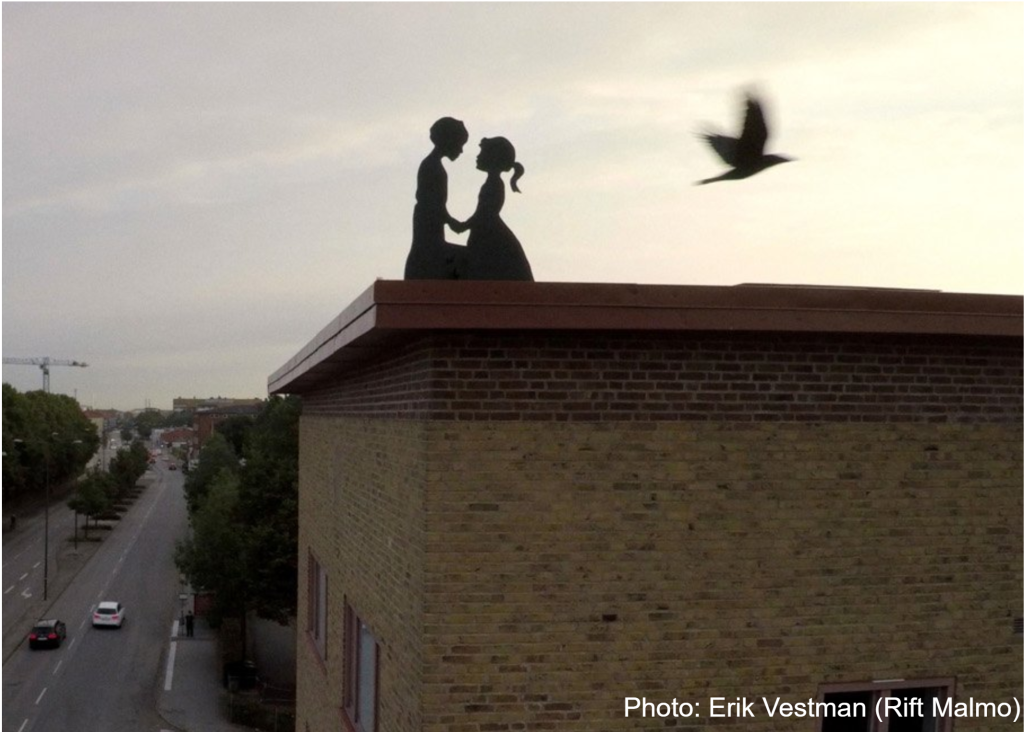
Take, for instance, Rift Malmö in Sweden. These artists commemorate victims of fatal shootings by placing a paving slab with a “rift” (crack) mended with an inlay of bronze at each site. Without any inscriptions, these slabs tell a deeper story. They signify collective mourning, publicly reminding us that these losses are both haunting and persistent. Similarly, the Kigali Genocide Memorial in Rwanda commemorates the 250,000 victims of the genocide against the Tutsi. While the rifts in Sweden highlight ongoing societal fractures, the Kigali memorial sends a “never again” message, consolidating collective grief into a safe educational space for future generations.
A healthy society acknowledges its past and builds its future on those lessons. Like the Japanese principle of Kintsugi, the past should never be shoved under the carpet; it must be highlighted. Kintsugi repairs broken pottery by exposing the cracks with gold, silver, or platinum to celebrate the object’s history and resilience. To hide the crack is to obscure the journey.
To ask if there are “ungrievable lives” is a critical ethical question. When a society decides certain lives are not worth a monument, it commits a second act of violence through erasure. Every life is grievable, regardless of whether it ended through organized crime, police shooting, or genocidal violence. An ungrievable life is only a life that was never born. It is our collective responsibility to acknowledge the events that hurt the present. Artivism refuses to hide the “crack” and contradicts the official silence.
The art of commemoration is not only for remembrance, but for education, documentation, reflection, and prevention. It is a constant reminder that society owes it to itself to address failure and trauma. A people who know their history will never forget their future.
Written By: Byke Freeborn|X/Twitter: @bykefreeborn