
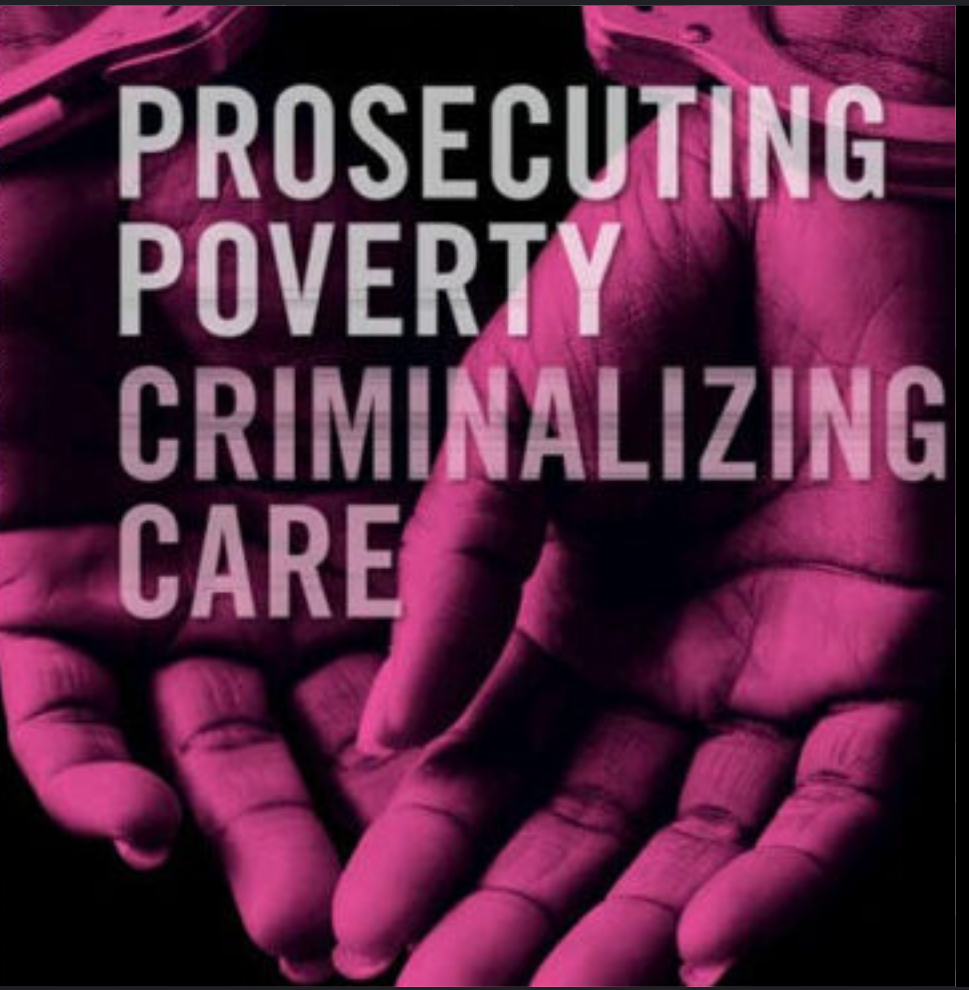
As we sat there listening to a home-maker (they call her a house-wife) praise her husband on what he does for the family; paying the bills, protecting the home, providing support, security and direction for the family. I was re-assured there is hope for the family as an institution. Family is the smallest unit of a society. The post millennium trend in families sees an increased separation rate through divorce, irreconcilable differences or the state taking custody of a child.
On the surface, anyone would think “family policing” means the act of parents or family members ‘policing’ a child from ‘going bad’. The term was popularized by Dorothy Roberts in connection with one of her works. In scientific terms, “family policing” is the “child protective system” which is part of a state “welfare” institution overseen by state actors who are neither part of the child’s organic family nor share any authentic emotional or mutual bonds with the child. It is a legal term that describes the process by which state-approved actors engage in transactional protection of an “endangered child” with the aim of “guarding” the child from its organic family in a bid to “protect” the child. In most of the communities where we work, aspects of family policing includes informal fostering, where a child is taken to live with an extended relative who mentors, supports or pays for the education. There is a shift towards formal policing to challenge the proliferation of child trafficking and child labor, but overall, the West African countries’ approach to family policing is evolving and operates at the intersections of formal and informal practices.
A member of an organic family and a state employed “family police” have opposing attributes. While a member of an organic family is part of the family unit through its natural development and contributes to the family’s mutual and emotional bond, a family police is an rigid or institutional monitoring agent assigned to oversee a child in situations where the parent(s) is adjudged to be incapacitated in the parenting responsibilities. Guiding a child away from its source of mutual and emotional strength is compared to peace-keeping by the use of guns; contrary! Guns are not attributes of peace but tools of violence, hence guns for peace contradict the mission of peace-keeping.
THE SURVAILLANCE OF CULTURE
“Child Welfare system” are administered in many countries through the state social service. There are state actors who “protect” children against their parents. The sociological nomenclature of this institution makes it attractive, so people believe the agencies genuinely remedy an “endangered” child by protecting the child against abuses. The agencies are originally intended for noble mission as they were in principio, designed as a supportive arm, helping to save the children who are in real danger, however, many social systems have proven to be more investigative than supportive.
For instance, while on a campaign in one of the Northern European countries, there was an Italian migrant woman in that country who narrated in tears, how the state social service took custody of her child. According to her, this is because her Italian “yelling” and performative approach to parenting seemed overly animated and is considered to endanger the child’s well-being. The woman said in tears: “I am Italian the way I raise my child is part of my culture, I don’t speak to them from a heart of hate or irresponsible parenting, I love my children and I will fight to win this case”. Another migrant woman from Nigeria in that country said: “The social service took my child to a foster home, after few weeks, she showed signs of emotional outburst they could not handle. She couldn’t continue to live there, so they brought her back to me. Now they put the both of us in a social house where we are under surveillance. We meet with the social staff at a round table talk every week. The process delays my life and I cant wait to get it out of the way”.
A PUNITIVE SUPPORT SYSTEM?
The University of Georgia’s school of Law Professor, Shanee Brown, argues that social service is called “everything to racially marginalized families”. Perhaps this is true given that a 2026 data in the USA, shows that 53% of black children experience a Child Protective Service investigation before age 18, compared to 28% of white children. This is more of a socio-economic and racially targeting issue than it is a migrant issue. The American system once blamed behavioral outcomes of black children on a black rapper and banned his records. Citing that the lyrics were “detrimental to kids” even as the state itself continues to ignore the socially engineered miseries. In other countries, the number of families traumatized by the child protective system are largely of a race other than native population, so blaming outcomes on a culture and addressing it through a “harmless” but invasive and profiled approach, kind of questions the motive. If the mission is “welfare” but the tools are “investigative and punitive ” the system is effectively waging a war on the very resilience it claims to protect.
THE COMMERCIALIZATION OF SOCIAL PROBLEM.
There are definitely young people who are genuinely endangered by way of family parenting approach. Such youngsters genuinely need support to overcome the tide. Some school staff and therapists are doing a great job while others continue in their roles as “family police” informants. They approach a child at school or therapy sessions, while pretending to care, they apply a greater knowledge to manoeuvre and manipulate a child into agreeing that mama’s “whoop on the backside” constitutes an abuse and should be treated as a violation of the child’s right. Do modern-day social service systems operate as commercial entities who always need customers or have they evolved as a necessary budget-dispensing machine that pay professionals to commercialize social problems?
The system not only interferes with family processes, it promotes the insubordination of cultures, and in many cases, criminalizes the non-native population living in a heterogenous space. All of these put together, constitute a psychological warfare against a people’s resilience to propagate agency. If this same warfare approach is launched as a strategy against the tech giants for child safety instead of policing the physical family, it will increase the chances of surmounting juvenile delinquency in the society.
Written By: Byke Freeborn |X/Twitter: @bykefreeborn