
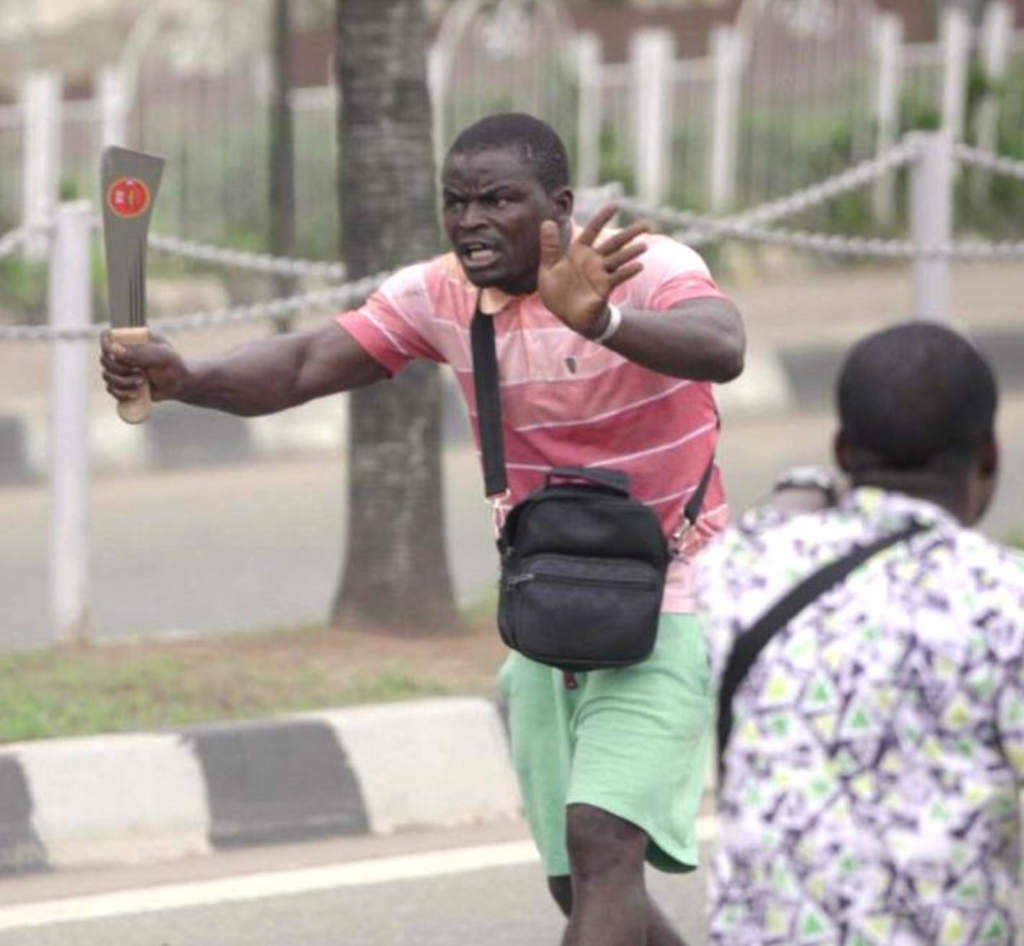
THE IMBALANCE
Terrorism is one evidence of disturbances in the new world. The pursuit for governance and control, exercised through potential powers of large states, have put many by the side and others are trailing or opposing.
Politics is a social means through which numerous interests may be reconciled, but one question is: whose interest supersedes the other and what establishes one interest above another? The answer is power!
Since politics is a struggle over scarce resources, power is the means through which this struggle is conducted. And as a social activity, we expect politics will have forms of humanistic elements/primordialism, and bias may creep in through values, intentions and culture as easily as through external pressure.
In the case of Nigeria, the famous “nothernization policy” spoken about by Ahmadu Bello in 1965 and perpetrated by the Fulani oligarchs is an example of primordialism- the use of state offices for the benefit of ones ethnic group.
Nigeria’s lightweight responses to the killer herdsmen, the terrorists who shoot down Air Force Jets, the kidnappers who take ransom and the Boko Haram terrorists compared to heavy crackdown on agitators for self-determination are some of the biases which suggests the intentions and dimensions of those in power.
THE POWER EQUATION:
In the center of politics lies both conflict and the process of conflict resolution. The inescapable diversity that exists among humans sometimes results in competition between opposing forces. This reflects the diversity of opinion, interests and needs. In the 20th and early 21st century, there has been problematization with the political. Problematization with politics is also associated with postmodernism, multiculturalism and neoliberalism. In the context of power, politics is the capacity of A to control B, this explains the power equation between A and B.
How one gets power and exercises the same has been a matter of ideological debate. The main motives people are involved in politics, is arguably because of power, survival and pleasure. As public and private power continually interact in wealth creation and distribution, the international political economy gives us an insight to the interplay between material power, ideology and institutions.
The power relations which establish one interest over the other and leave are a potential source of conflict. The consequences of the “interrelationship between public and private power in the allocation of scarce resources” is represented in the connection between material power, ideology and its interaction with heterogeneous institutions. This interrelationship produces different outcomes in certain places at different historical time periods.
The interrelationship is also exercised by state and non-state actors through economy, political and International. In pursuit of these three aspects, actors base their policy actions on certain ideologies, set agenda and structure the rules in various areas of international economic relations, exercise power in a manner that gives some actors privilege and leave others to disadvantage; in the long run, it is conflictual and could degenerate to terrorism.
OUTSOURCING TERRORISM?
Finally, terrorism is the use of illicit violence and weapons against non combatants to challenge the existing sate norms in order to create fear and achieve a vested goal. Ironically, those whom Nigeria’s government describe as terrorists are those who defend their communities against killer “bandits” whereas the bandits themselves are those who show characteristics of terrorists.
If “bandits” who shoot down the Air Force jets are identified by the governing class as people who are “simply into kidnapping business” , it therefore means that the “business” men are not judged as “bandits” or as a people who challenge the state norms, this suggests that the state is informally outsourcing violence against its own society.
The question would be: is the governing society in Nigeria glorifying the illicit violence by “bandits”? Is the government biased or does the “vested goal” of the government align with that of the bandits? There is definitely a misalignment between the political rhetoric and the security action.
By: Byke Freeborn| X/Twitter: @bykefreeborn