
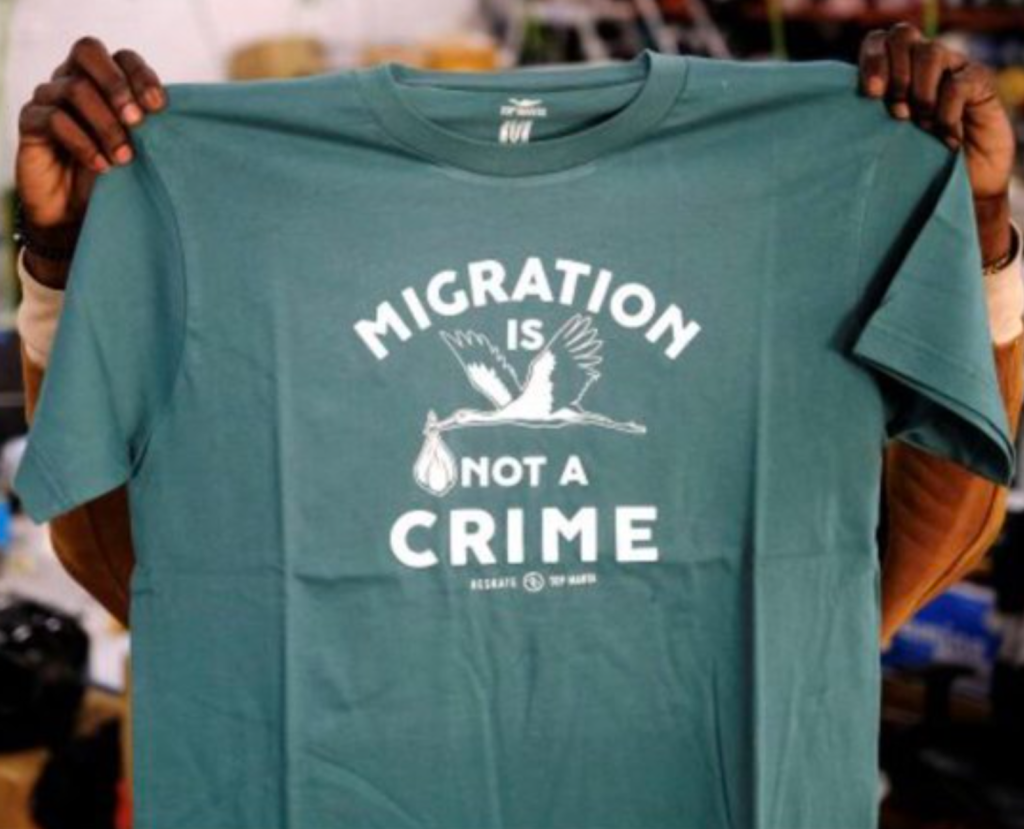
Legalizing The Shadow workforce.
The decision on 27th January, 2026 by Pedro Sanchez’s-led Spanish government to grant “amnesty” or legal residence to 500,000 undocumented migrants in Spain has attracted both praises and critiques. Migrants who have stayed five month before the 31st of December 2025 and who can prove they have no criminal records are qualified to apply and be issued a one year residence permit with a possibility to extend it. To view this as a good or a bad decision would depend on whose lens is used. The legislation has sparked tension between economic necessity and political rhetoric.
An undocumented migrant is someone who illegally enters a country without inspection or someone who legally enters a country with a valid document but the document/visa expires while the person remains in the country. The January decision by Spain allows this category of migrants to apply for legal residence, a measure many describe as a trend against other European countries who have cracked down on “illegal” migration. The notion of migration arises when a migrant from a migrant-sending country moves to cross international borders; this is usually in the face of abundant negative push factors from the migrant-sending country. The push and pull factors are also linked to the world system, culture, economy, environment and political states. Migration is one of the oldest action against poverty, it is human mobility as well as a response to social, political, economic and environmental changes. Most immigrants in the global North originate from countries with large populations living below the international poverty line; therefore they are driven by the desire for liberation, to reduce inequality, and to improve livelihood and reach human potential. As an art of governance, the migration system is a technique for directing human behaviour, managing the population and economy and configuring control mechanisms.
THE ANATOMY OF THE SHADOW WORKFORCE
Some regions in Spain rely on agriculture as a source of revenue. Majority who work in Spain’s lemon and fruit farms in most of its regions are non native, undocumented migrants whom the system allows to remain and work in the underground economy using “improvised” paper works. They are the ghost in the machine, they live and work for many years in grueling conditions without labor rights and access to social benefits while contributing to economy and social revenues they are not qualified to benefit from. According to one source, “the far right entrepreneurs enslave undocumented migrants in Spain, and everywhere” and continues to be institutional firewalls against human and labor rights of these workers who work in agriculture, tourism and services. The existing system has historically blocked migrants from rights while allowing their labor to pass through. Many Western countries’ economic performances have largely been built by a migrant work force and Spain is not an exception as migrants account for about 80% of its growth in the past 6 years and 10% of its social security revenue that service unemployment, public healthcare system and other social safety nets.
THE CHARITY PARADOX:
Many “charity” organizations proudly host the faces of “people in need” from Africa, Asia or East Europe on their website or on their promotional materials, however, many who support these organizations by way of donations are part of the community decrying Spain’s new migration legislation that favors the faces they see on charity platforms which motivate their charity donations. How nice that people donate to help people abroad but reject them as neighbors!
Many alarmists have condemned the move in strong terms saying it is a move to “replace the Spanish native population “, “Europeans doing more to destroy Europe than the Trump-led administration could ever do”, “The Invasion of Spain”. But the outcry have been silent over the years that the underground economy and its employers exploited the labor of undocumented migrants to grow their businesses. The business of underground labor employers thrive on the fear and vulnerabilities of undocumented migrants who are driven to despair by anti-immigration laws. Then we ask: are we all part of a corrupt system which is a product of economic and political processes?
The amnesty isn’t only about “giving out papers”, it will also dismantle a process where business owners thrive on the fear and vulnerabilities of the undocumented. By legally onboarding a shadow workforce, the system is turning ghost workers into citizens and forcing the “institutional firewalls” to finally recognize human dignity over cheap labor.
Written By: Byke Freeborn. X/Twitter: @bykefreeborn