
THE “ACCEPT” TRAP AND LIFE BEYOND THE SCREEN!
There exists a chasm between our desire for digital privacy and the actual behaviour of clicking “Accept” button on digital products.
THE ILLUSION OF CHOICE
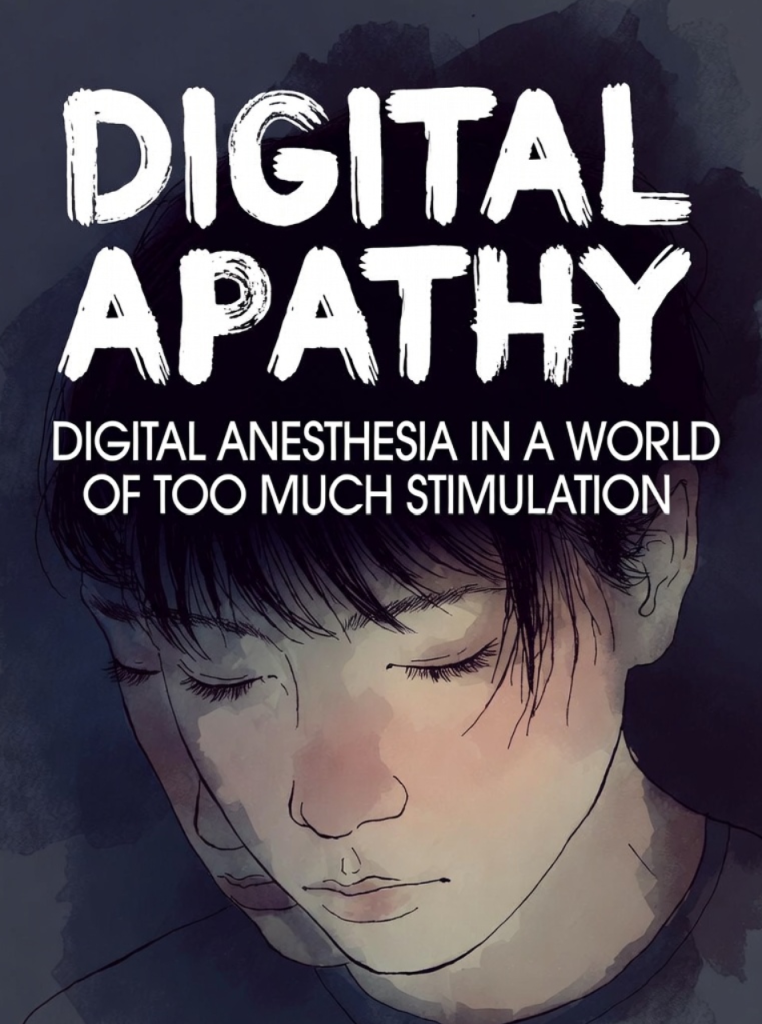
The service’s policy for a single service like X (Twitter) takes up to 6 hours to read. For an average person accessing a popular US website, it takes around 46 hours (a full workweek) just to read privacy policies. So if you have ever clicked the “ACCEPT” button without reading the “Terms and Conditions” (T&C) of a digital service and proceeded to “check out” the service, you are not alone in this trap! Whether a learned silk (legal expert) or an ignorant donkey, whoever seeks to sign-up for a digital service is trapped in this “manufactured helplessness”. Everyone probably cares about the T&C but are helpless without clicking the “ACCEPT” button. This happens because we know the legal jargons are ambiguous, time consuming, and if we cannot stop the moving caravan, the most practical and least resistant path is to click on “Accept”, “Agree” or “Proceed” buttons. It doesn’t matter who is in front of the screen doing the clicks. It is like a person administered with anesthesia, we are conscious but less sensitive, and we give up our privacy and data security without thinking the consequences of our digital engagements. Thanks to information overload, surveillance and complex “T&C” that desensitize users.
DIGITAL APATHY: The Silent Killer
While digitlantism (digital-vigilantism) involves a hyperactive response against perceived wrongs on the digital space, digital apathy is the opposite, soft but encroaching. It is probably the silent killer of our digital age. Digital apathy, sometimes called the psychological shrug describes the numbness, or a state of less sensitivity to technological control that overwhelms a digital service user and causes the willingness to surrender to the digital sphere. The legal team of these service providers often trade-off on our psychological responses. The overwhelming legal documents on “Terms and Conditions” causes mental fatigue and suddenly the brain reaches a saturation and it no longer considers possible breach of personal data. Knowing that apathy is the brain’s way to save our time, we often click “ACCEPT” without a second thought as we go on to crush the rebellion that stands against our gratification, and we do this regardless of the legal implication on our personal data. By this, we continually surrender our digital trinity in the form of autonomy, competence and relatedness-the core aspects of self determination. You can put that in digital world, the “Accept” button is like a digital anaesthetic that ‘deadens’ the pain of losing our privacy as we undergo the ‘surgery’ of data harvesting in order to reach our personal goals. It’s a win-win situation isn’t it?
COST OF THE CLICK
There are consequences to this! For example, on social media where apathetic users continue to see a certain type of content because they “Agree” to “terms and condition”, the user is often subjected to algorithmic manipulation. This stops the agency from making an independent decision. Instead the user becomes a digital product that is easily steered by algorithms.
Take for instance the case between Spencer Meyer and Uber Technologies. Meyer sued Uber, alleging that Uber had engaged in price-fixing. Uber responded with a move to have the court stop the lawsuit, citing that once a user clicked the “Accept” and “Register” buttons, it implies such user agrees to the clause in the T&C which states that all disputes are to be handled through a “private arbitration”. Spencer Meyer argued he never saw the clause, but he lost the right to public hearing on the case.
The matter of ambiguous T&C’s with its characteristic parlance and large volume are generally a strategic mystery created by the legal team of service providers in response to the regime, and to keep the caravan moving. If the documents are short and simple to read, maybe the users will understand better and possibly rise against the standard.
RECLAIMING THE SELF
The all-or-nothing approach which triggers digital apathy offers a forced binary choice (either A or B). You cannot negotiate or say I will use the service but don’t track my data, it is such that either you give all or you are locked out of the party. It is also a form of psychological surrender whereby your choices does not have an impact on the outcome.
The “Accept” button is not just a gateway to getting a service, it is to some degree, a legal submission of competence and autonomy. The way to remain awake to this soft, rising and encroaching flood is to introduce or re-introduce a level of resistance through personal efforts or through campaigns that demand the legal T&C be written in a plain language. There are software as a service tools that serve as an intermediary tool to automatically read the complex jargons in a short time and highlight the traps in contracts. There are also organizations that fight against this digital anesthesia by campaigning for global digital clarity. While the campaign is stronger in economically stronger nations, small business in weaker institutions could create the profession of a “Digital Steward” to manage its data life cycle or engage the law to slow down the moving caravan which seems to be moving too fast for individuals. By demanding plain language, we move from digital apathy toward autonomy.
By: Byke Freeborn | X/Twitter: @bykefreeborn