
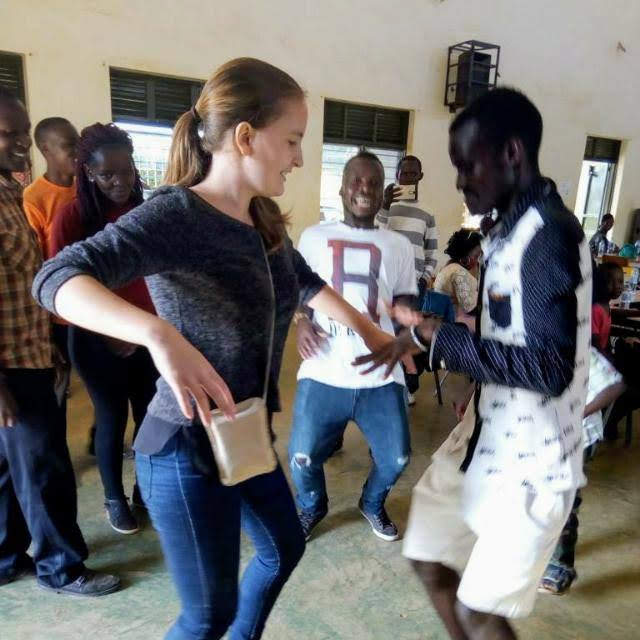
Arguably, it is the international system of knowledge and reward systems that draws development professionals away from an organic experience and interaction with the rural areas in many developing countries. Professionals are held bound by the urban provisions such as better housing, logistics, communication needs and the various infrastructure that provides ease in day-to-day life. The willing victims of the urban trap- professionals and academics- tend to cluster in towns even when on missions to serve the rural space. Foreigners in rural areas whose mission includes rural poverty and rural development are also prisoners of the urban centers. They include aid and agency workers, consultants, technical personnel.
Although some of them do live in rural areas within the period of assignment, they are also trapped to the urban centers by reason of logistics or similar needs. As a result, their commitment in the rural areas may be interrupted by the process of the system.
For these categories of rural development professionals, their major physical contact with rural spaces becomes through rural tourism; a community-based travel where the visitor experiences the rural agriculture, rural culture, education infrastructure or culture. The visit which may be for one day or for several days, influences all sources of information and subsequent analyses and policies formulated as the development roadmap for the location in question. The ideals eventually become widespread and is widely accepted as the reality of the place in question.
The astonishing omission appears as a result of the disconnect between the top-down approach of international development agencies and the lived realities of the communities. While the ‘outsiders’, interpret the local people as being poor due to their ignorance, backwardness and primitive nature, alluding they have themselves to blame for their poverty. The grassroot organization closes the knowledge gap by its role as knowledge producer and contextual translator. The gap could be efficiently addressed through a bank of experiential and contextual local knowledge found in the architecture of grassroot development organizations. They have daily contact with the people and exercise less formality with less administrative layers, essentially building structures that efficiently interact with the culture, the environment and the virtue of the people. The Local communities are not passive recipients of development resources, instead they must be viewed as the experts of their own lives.
Localized Innovation comes from daily, practical experiences and they are designed within ecological, cultural, and social limits to avoid the approach that often leads to failure when applied in diverse environments. To illustrate how the shift changes outcomes, consider our recent investigation which set off with a bias; that the rural people lack the virtue and potential to create their own prosperity. The realities from the investigation led to the formulation of a hypothesis. To test the hypothesis, we built three data vectors to collect data and test the hypothesis. Their results does not confirm the preceding bias but aligns with the hypothesis that “competence-resource” gap (not lack of potential), perpetuates a cycle of unskilled workforce in the rural communities. From the data and analysis, we designed a specialized innovation rooted in the practical experiences of the ecology and the people.
By prioritizing local and indigenous knowledge alongside scientific data, grassroots organizations challenge the widespread Western-centric epistemologies that often marginalize local wisdom as unscientific or unrefined. Universal solutions fail to meet the local realities of many rural communities, the process needs to shift.
Adapted from: Robert Chambers “Putting the Last first”
Written By: Byke Freeborn | X/Twitter: @bykefreeborn