
In the history of modernization, development has centered on the exploitation, development, and consumption of energy. Energy is fundamental to sustaining personal, national, and global progress, keeping it at the core of all economic and developmental discourse. Historically, fossil fuels have been the primary engine driving this journey. Before the industrial era, humanity relied on solar energy via photosynthesis, as well as wind, water, and animal labor—all of which remain essential components of the development cause.
There is an undeniable connection between energy usage and development indicators, specifically the Human Development Index (HDI). HDI accounts for life expectancy and healthcare, access to education, and standard of living. Data consistently reveals that increased energy consumption correlates with significant improvements in human development.
When comparing energy usage and HDI, the disparity is stark. Nigeria, with a 2026 HDI of 0.560, faces significant energy poverty and infrastructure gaps, resulting in low per capita energy consumption. Conversely, South Africa’s HDI of 0.741 reflects a higher degree of industrialization and energy grid saturation. In the West, Spain and the USA achieve “very high” HDI scores (0.918 and 0.938, respectively), supported by stable, high-capacity infrastructure. In these nations, energy is a background constant that powers educational technology, healthcare systems, and economic production. Without reliable power, a nation faces a structural ceiling on social and economic advancement.
Historically, the West’s rapid modernization was built upon the extraction and combustion of hydrocarbons. However, the global conversation is shifting. We are moving away from centralized, fossil-fuel-dependent systems toward renewable energy as an alternative pathway for decentralized growth.
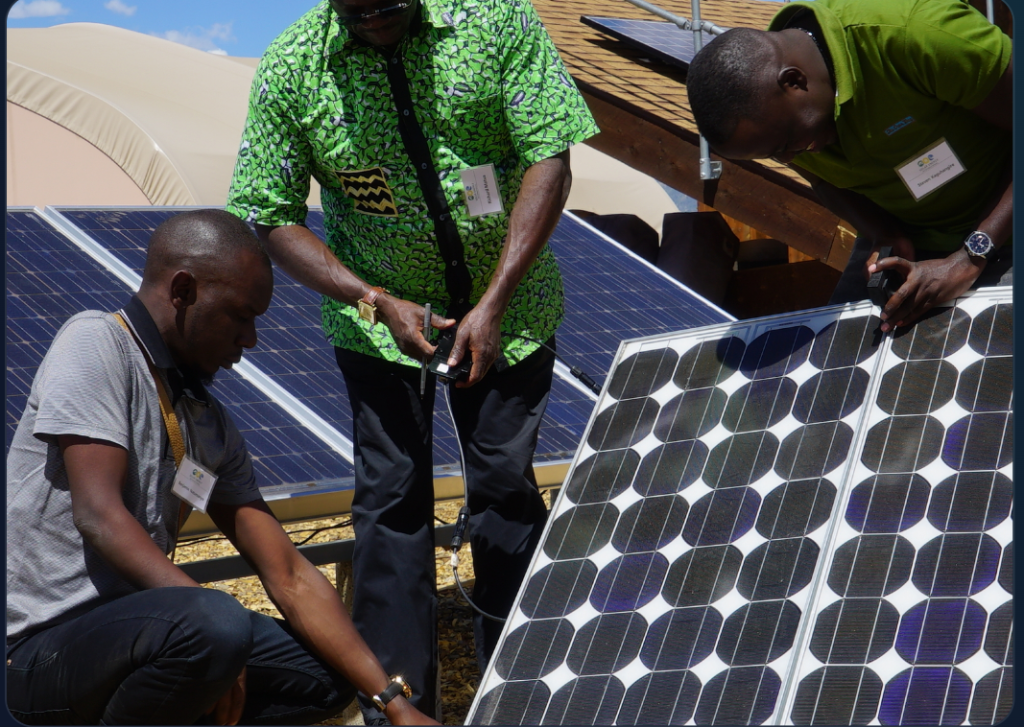
Iceland serves as the ultimate proof of this shift, boasting the world’s highest 2026 HDI at 0.972, with 100% of its energy derived from renewable sources. Iceland demonstrates that high-level development is not dependent on fossil fuels. For regions with high solar irradiance, solar energy offers a path toward decentralized power at the point of need. A single solar module can power a computer lab, shifting reliance away from faulty, centralized grids and fostering intellectual freedom.
Ultimately, renewable energy is the powerhouse that will democratize energy consumption. By exploiting localized renewable sources, residential and commercial users in emerging economies can achieve energy independence, enabling them to build the high-quality services and economic security necessary to climb the global development ladder.
Written by: Byke Freeborn| X/Twitter: @bykefreeborn.