
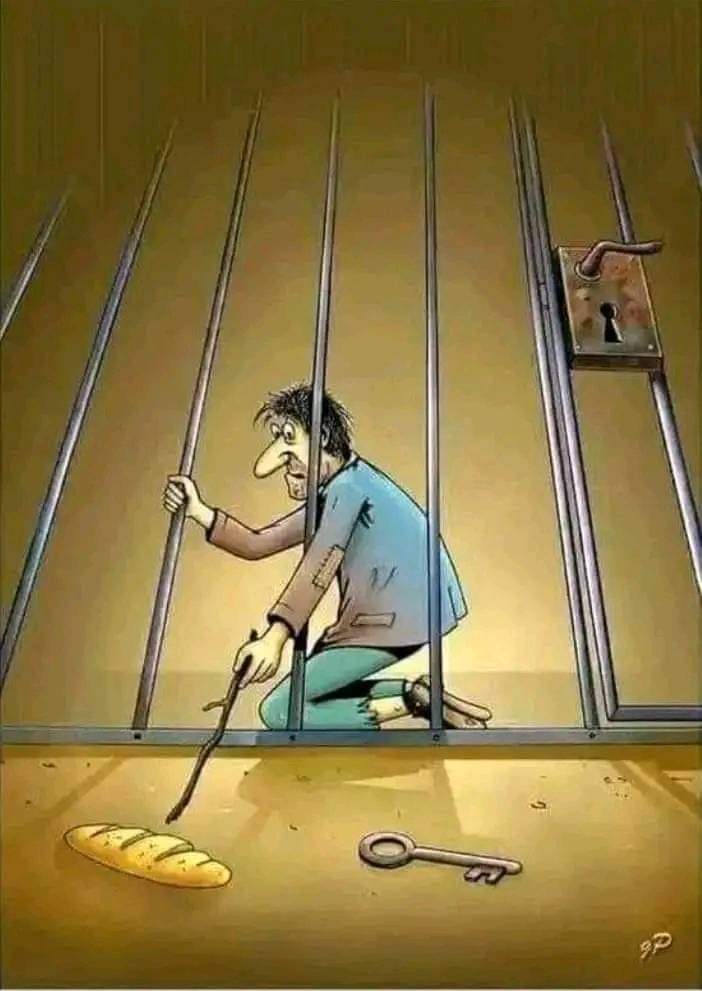
In low-resource economies, learners gravitate toward course modules that offer immediate return on investment (ROI) to secure their daily survival. When a system forces individuals to choose between short-term survival and long-term investment, survival always wins.
Data from skill acquisition programs in under-resourced communities confirms this: learners overwhelmingly choose short-duration courses that guarantee a swift financial return over longer, progressive learning tracks. While this choice is a perfectly logical response to the absence of social safety nets, it fundamentally alters the nature of education—shifting it from a holistic, progressive journey into a transactional, short-term exchange.
This survival-versus-sustainability dilemma is anchored in economic hardship, which creates a “scarcity mindset”—a natural, adaptive response to an urgent reality. When basic needs like food, shelter, and healthcare are insecure, the opportunity cost of long-term education becomes unsustainable. To someone uncertain about their next meal, a broad or abstract curriculum feels like a luxury. Short-term modular courses provide a direct line to cash flow; however, this transactional approach sidelines essential foundational skills like critical thinking, complex problem-solving, and intellectual rigor, which require time and stability to mature.
Furthermore, an unstable economy lacks the predictability required for linear progression. Traditional curricula are often built on a framework where learning ‘A’ is a prerequisite for mastering ‘B’ over an extended period. In an environment plagued by inflation, illness, systemic insecurity, and contract failures, this stable baseline does not exist. This structural mismatch is the tragedy that pushes learners out of deep-learning, trapping them in a cycle of solving only today’s immediate problems rather than acquiring the skills necessary to break the generational cycle of poverty.
The solution is not to force learners back into rigid, long-term models that ignore their reality. Instead, we must embrace a hybridized “Earn-While-You-Learn” architecture. Educational programs should be re-engineered so that every short, affordable module delivers an immediate micro-ROI, while simultaneously serving as a building block in a broader, progressive pathway. If the market demands speed and affordability, the educational structure must adapt to meet that demand without sacrificing the ultimate goal of long-term mastery.
Written by: Byke Freeborn| X/Twitter @bykefreeborn